Harris County Sues Trump Administration Over $23.3 Million Security Grant Tied to Election Rules
Harris County has sued the Trump administration over federal rules that tie election procedure changes to millions of dollars in public safety grant funding the county relies on every year.
The lawsuit, filed against the Department of Homeland Security and the Federal Emergency Management Agency, was brought jointly with El Paso County, the city of Columbus, Ohio, and the Metropolitan Government of Nashville and Davidson County, Tennessee. All four are challenging new conditions attached to the Homeland Security Grant Program, including the Urban Area Security Initiative, which funds counterterrorism equipment, training and emergency preparedness in major metro areas.
At stake for Harris County is more than $23.3 million the Houston-The Woodlands-Sugar Land region is set to receive through the Urban Area Security Initiative for fiscal year 2026. Under the new rules, FEMA can withhold 20 percent of that money, close to $4.7 million, until the federal government confirms local election systems comply with a new set of requirements.
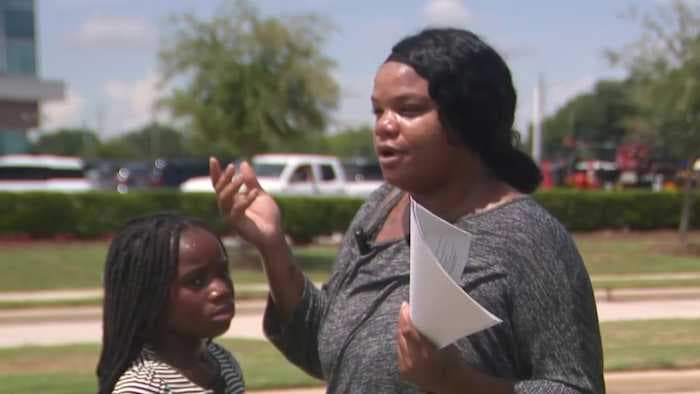
"This is one of the largest public safety grants that Harris County applies for and receives every single year," Harris County Attorney Abbie Kamin said. She said the money pays for specialized law enforcement training, detection equipment for chemical, nuclear, biological and explosive materials, and public alert systems.
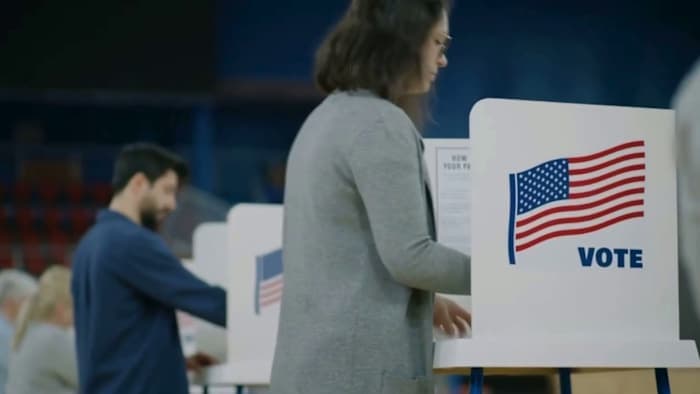
The federal rules require states and high-risk urban areas to submit a plan to move away from voting systems that use barcodes or QR codes to count ballots and toward hand-marked paper ballots, while still allowing accessible ballot-marking devices for voters with disabilities. Jurisdictions must also conduct a manual audit covering at least 5 percent of randomly selected precincts and ballot batches, reconcile the number of people who voted against the number of ballots cast, verify the citizenship of registered voters through the federal SAVE database, and verify the citizenship of poll workers and others who operate election systems.
Harris County currently uses the Hart Verity system, in which voters make selections on an electronic ballot-marking device, review a printed record of their choices, and then feed that paper record into a scanner for counting. Because that system relies on barcodes or QR codes for tabulation, the county would have to submit a plan to shift toward a primarily hand-marked ballot process to meet the new federal condition.
Kamin said that shift would require more equipment, more poll workers and additional training, and could cost millions of dollars the county hasn't budgeted. "To implement the things that they are demanding of us would cost millions of dollars," she said. "It's an unfunded mandate." She said the expanded manual audit alone could take three to four months to complete.
The Trump administration's position is that election infrastructure is part of national security and that the federal government has the authority to attach conditions to grant money intended to protect against terrorism and other major threats. Josh Blackman, a constitutional law professor at South Texas College of Law Houston, said that argument has some legal footing. "The strongest argument is that there's a close relationship between the conditions they've placed and the funding for terrorism," Blackman said. "They've argued that election security is important to national security."
Harris County counters that the election conditions aren't closely tied to the actual purpose of the counterterrorism grants and were imposed by the executive branch without authorization from Congress. Blackman said one question likely to shape the case is whether local governments had clear notice of the new conditions before they accepted or budgeted around the funding. "When Harris County accepted this money in the first place, did they have clear notice?" he said. "You have to notify them what the conditions are."
The county also argues some of the new requirements conflict with Texas election law, which gives political parties and election judges a role in selecting poll workers. The federal policy would instead put counties in charge of verifying the citizenship status of those same workers, a responsibility the county says doesn't align with how Texas law currently assigns that authority.
The lawsuit does not ask a court to block the entire Homeland Security Grant Program, only the election-related conditions tied to it. No hearing date had been set as of the filing. Harris County officials said they intend to keep applying for and using the security grant funding while the case moves through federal court.