Houston Council Presses HPD on 103 ICE Contacts as Chief Skips Hearing
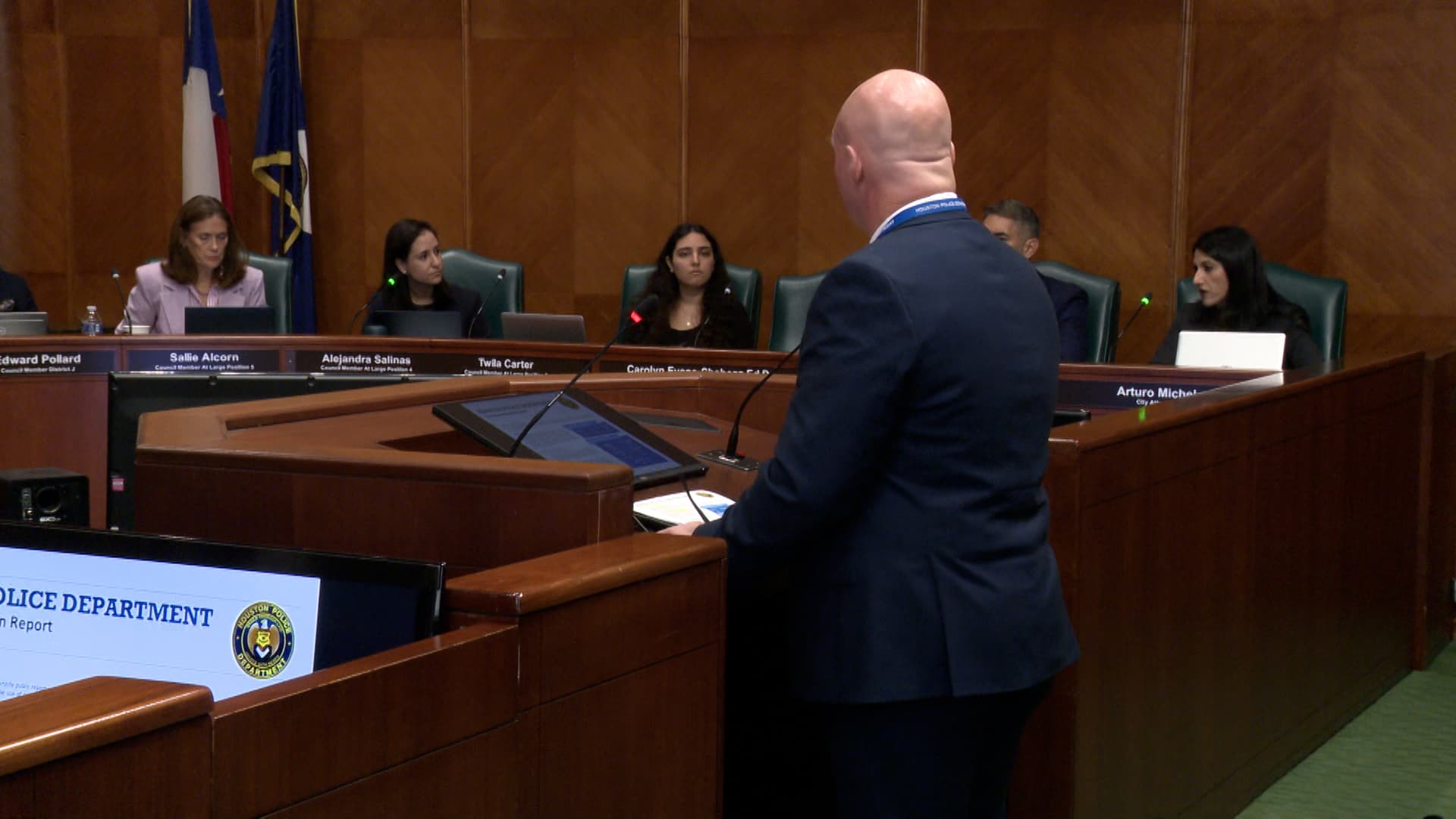
A hearing meant to give Houston City Council members a routine update on police interactions with federal immigration agents turned into a standoff with the city's own legal department Tuesday, after Police Chief Noe Diaz failed to show up and attorneys blocked HPD staff from answering basic questions.
The Public Safety Committee had scheduled Diaz to present the Houston Police Department's quarterly report on its interactions with U.S. Immigration and Customs Enforcement. Diaz did not attend. Instead, HPD sent data specialist Jim Mallard, who delivered the report but was barred by the city attorney's office from discussing an ongoing civil lawsuit, specific incidents in the report, or any personnel actions connected to the cases.
Committee Chair Amy Peck confirmed the limits placed on Mallard's testimony before the questioning began. Council members were left with a stack of numbers and few explanations behind them.
The report showed HPD had 103 contacts with ICE during the quarter. The average length of those detentions was 39 minutes, though some stretched to two hours. Councilmember Flickinger asked whether HPD tracks what crime, if any, triggered an ICE "hit" during a stop. HPD's restricted testimony left the question unanswered.
Councilmember Alejandra Salinas then turned her questions toward the legal department itself, asking senior assistant city attorney Melissa Azadeh whether her office had instructed Diaz and Assistant Chief Thomas Hardin not to appear at the meeting.
"Councilmember, by discussing what the legal department instruct or did not instruct, that would be a violation of privilege," Azadeh told her.
Salinas rejected that answer directly. "That is an inaccurate interpretation of privilege," she said. "I would encourage you to go back and read the rules."
The exchange left the committee without confirmation of who made the call to keep Diaz away from the dais, or why a civil lawsuit would prevent the city's top uniformed officer from appearing at a public meeting to discuss a report his own department produced.
HPD has faced mounting pressure from council members over how it handles ICE requests since the immigration reporting requirement took effect. Council members have repeatedly pointed out that state law limits how much local police can refuse cooperation with federal immigration authorities, with some members previously telling reporters they feel they have little authority over how HPD structures its ICE interactions in practice. Tuesday's session was meant to be a chance to get specifics on the numbers behind that policy, not just the topline count.
Instead, the meeting produced a fight over process. Multiple council members pushed back on the idea that a pending lawsuit could justify silence on numbers already made public in the written report, arguing that discussing the general pattern of detentions, average length, and how officers determine an ICE "hit" is different from discussing the litigation itself. City attorneys held their position throughout the hearing, repeating that anything touching on the lawsuit or the decision-making behind Diaz's absence was off-limits.
By the end of the session, council members had the topline figures: 103 contacts and a 39-minute average detention with outliers reaching two hours. They still did not know what criminal allegations, if any, were tied to those stops, why the chief had skipped the hearing, or whether the city attorney's reading of privilege rules would hold up.
The Public Safety Committee did not set a firm date for a follow-up hearing where Diaz might appear directly. Peck's office said it plans to press HPD on scheduling before the next quarterly report is due. Salinas said she intends to seek a written legal opinion on the privilege claim Azadeh's office asserted at the hearing.