Former Pasadena Sergeant Surrenders Police License Amid Flock Camera Misuse Investigation
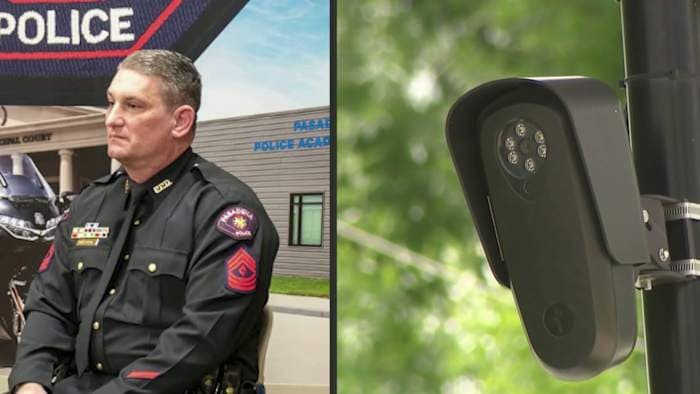
A former Pasadena police sergeant has given up his Texas law enforcement license, closing out an internal investigation that began after a city council member accused him of misusing the department's license plate reader cameras to track a fellow officer.
The Pasadena Police Department confirmed that former Sgt. Michael Palitz surrendered his Texas Commission on Law Enforcement peace officer license "in lieu of criminal prosecution." Palitz has not been charged with a crime, and the department said the surrender agreement resolved the matter after he resigned from the force last month.
"The matter was resolved through an agreement requiring the individual to surrender his Texas Commission on Law Enforcement (TCOLE) peace officer license in lieu of criminal prosecution," the department said in a statement. It declined to provide further comment, saying the case is now closed.
The department first disclosed in July that Palitz had resigned while the internal investigation was still open, and said at the time that the inquiry would continue despite his departure. That investigation followed allegations from a Pasadena city council member that Palitz had improperly accessed the department's Flock Safety camera system, a network of automated license plate readers, to monitor the movements of another officer. Those allegations have not been independently confirmed.
The council member's claims prompted discussion at a Pasadena City Council meeting, where members pressed for more transparency about how the department handled the matter and what, if anything, the internal review found. City officials have not released the findings of that investigation publicly.
Under Texas Commission on Law Enforcement rules, officers can voluntarily surrender their licenses for a handful of reasons: as part of a termination agreement, a criminal plea deal, a settlement with the commission, or other circumstances the commission allows. A surrender can be permanent or limited to a set period of time. If the paperwork doesn't specify an end date, the commission treats it as permanent.
Howard Henderson, founding director of Texas Southern University's Center for Justice Research, said the commission is the state's licensing and standards body for police officers, jailers and other peace officers.
"They essentially handle all law enforcement licensing and standards in the state of Texas," Henderson said. "They essentially establish minimum qualifications, training, any ethical standards for police officers, and it can take licensing action when those standards are not met."
Henderson said a permanent surrender carries lasting consequences for the person who signs it.
"TCOLE says that the person is permanently ineligible to hold or obtain any TCOLE issued license," he said. "In plain terms, that person cannot return to a TCOLE licensed officer in Texas."
That means Palitz can no longer work as a licensed police officer or county jailer anywhere in Texas. Henderson noted, though, that the commission's reach stops at the state line. A permanent surrender in Texas doesn't automatically bar someone from pursuing law enforcement work in another state, since licensing decisions there rest with that state's own regulatory body.
Flock Safety cameras, the system at the center of the original allegation, are automated license plate readers that many Texas police departments, including Pasadena's, use to track vehicles for investigative purposes. Department policy restricts the cameras to official police work, and using the system to track a person for personal reasons would fall outside that policy.
The Pasadena Police Department has not detailed what its internal investigators found regarding the Flock camera allegations, nor has it said whether the surrender agreement was directly tied to that specific claim or to other conduct uncovered during the review. The department has not said whether it plans to release additional details now that the case is closed and no criminal charges have been filed.
City council members who raised concerns about transparency in July have not said whether they will seek further information from the department now that the licensing matter has been resolved.