A federal lawsuit accuses the Texas Windstorm Insurance Association of secretly reducing Hurricane Beryl damage estimates for thousands of coastal homeowners.
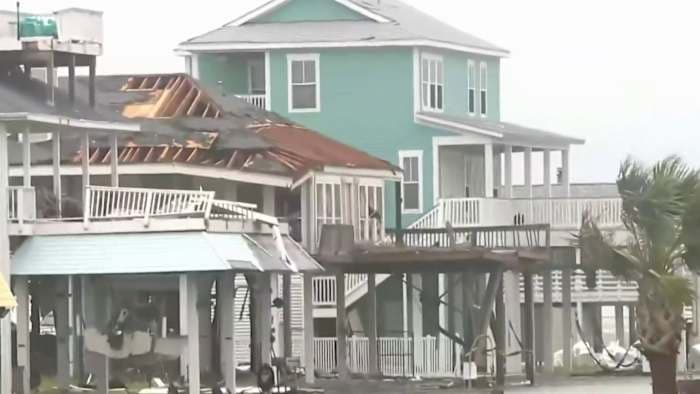
Three homeowners have filed a proposed federal class-action lawsuit against the Texas Windstorm Insurance Association, an outside adjusting firm and individuals involved in processing Hurricane Beryl claims. The lawsuit alleges that damage estimates prepared during in-person inspections were later reduced by someone who never visited the properties, in some cases cutting payouts by more than 60%. Attorneys for the homeowners say the practice may have affected 20,000 to 25,000 policyholders and hundreds of millions of dollars in claims.
A proposed class-action lawsuit filed in federal court accuses the Texas Windstorm Insurance Association, known as TWIA, of secretly reducing Hurricane Beryl damage estimates after adjusters had already inspected homes in person, a practice attorneys say may have shortchanged thousands of Texas coastal residents.
The lawsuit, filed on behalf of homeowners Ernestine Bell, Alicia Stuart and David Mohun, names TWIA along with outside adjusting companies and individuals who worked on processing claims after the July 2024 storm. It alleges that field adjusters visited each property, documented the damage and prepared repair estimates, only for someone who never set foot on the properties to later cut those estimates down before TWIA approved and paid out the reduced amounts.
"What they got was not what they bargained for," attorney Shaun Hodge, who represents the homeowners, said at a news conference Tuesday.
None of the allegations have been proven in court, and a federal judge has not certified the case as a class action.
Stuart's estimate allegedly dropped from about $90,948 to roughly $30,817, a reduction of about 66%. Mohun's estimate fell from an initial $55,406 to $31,013, according to the lawsuit, a cut of about 44%. Bell's claim was reduced from $22,464 to $10,389. The complaint says the final paperwork sent to homeowners kept listing the original field adjuster as the estimator, without clearly disclosing that someone else had gone in afterward and changed the numbers.
Bell's claim gets the most detailed treatment in the filing. Records cited in the lawsuit identify field adjuster Lee Olivares as the initial estimator, then show a second person, David R. J. DeVilbiss, listed as an owner and editor of the file. A recorded change allegedly dropped Bell's estimate from $26,235.85 to $10,111.03, a 61.5% reduction, while the final document delivered to Bell still carried Olivares's name as estimator.
Attorney Craig Eiland, who also represents the homeowners, said Olivares has signed an affidavit stating he had no knowledge of and did not approve the reduction. Eiland said the estimating software used by adjusters, Xactimate, keeps a record of who accesses and edits a file and when.
"The good thing about Xactimate is it has digital fingerprints," Eiland said.
The lawsuit alleges DeVilbiss was working from Ohio when he made the changes to estimates that had been prepared after adjusters inspected the Texas properties, and that the revised numbers were then sent back to TWIA in Texas.
The complaint states that DeVilbiss, the person accused of altering the estimates, is the brother of a senior TWIA claims executive. Leading Edge Claims Service was the independent adjusting firm TWIA had contracted to help handle the volume of claims that came in after Beryl. The plaintiffs' attorneys say they are seeking additional records on how TWIA selected and supervised outside adjusters, and who had authority to change an estimate after it left the hands of the person who actually inspected the damage.
Hodge said his legal team reviewed a broader sample of files handled by the same field adjuster named in the lawsuit and found more than 80% of those estimates had later been changed.
"We believe this impacts tens of thousands of homeowners that filed a claim after Hurricane Beryl," Hodge said, putting the potential number at 20,000 to 25,000 policyholders and the total amount at issue in the hundreds of millions of dollars.
Hurricane Beryl made landfall on the Texas coast in July 2024 and knocked out power to millions of Houston-area residents for days, and caused widespread roof, fence and structural damage across the coastal counties TWIA insures. TWIA was created by the Texas Legislature to provide windstorm and hail coverage in areas where private insurers often decline to write policies.
The case is now in front of a federal judge who will decide whether to allow the lawsuit to proceed and whether it can be certified as a class action covering other Beryl policyholders whose estimates were revised. Hodge and Eiland said they intend to seek TWIA's internal records on the adjusting process as the litigation moves forward. TWIA has not filed a public response to the allegations.